Second-Generation Success: How Andy Hunter Built on His Father’s Franchise Legacy
Some franchisees inherit a business. Others inherit a decision-making process—and that turns out to matter a lot more.
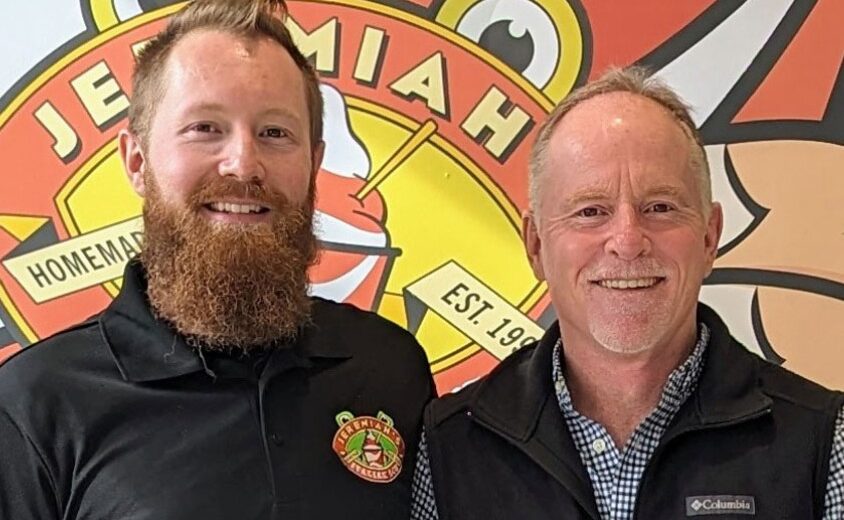
Andy Hunter is a three-unit operator of Jeremiah’s Italian Ice in the Carolinas, working alongside his father Mike Hunter, a 39-year franchising veteran with experience across Subway, Tropical Smoothie Cafe, Marco’s Pizza, and now Jeremiah’s. Andy’s path into the family business wasn’t triggered by a single moment. It came from years of proximity to his father’s decisions: choosing a market, doing due diligence, and starting over in a new territory. By the time Andy was evaluating Jeremiah’s for himself, he was drawing on decades of firsthand exposure to how franchise agreements get read, how sites get chosen, and how unit economics get scrutinized before a signature ever hits paper.
That head start is one of the clearest advantages of growing up inside a franchise family. But as Andy tells it, the real test of a family partnership isn’t the business plan—it’s the operating agreement between generations.
The Rule That Keeps the Partnership Together
Andy runs day-to-day operations across the Hunters’ Carolinas territory, while his father takes a more advisory role. Their system is simple: if they’re not aligned on a decision, it doesn’t move forward. When alignment isn’t possible and a call has to be made, experience leads.
Andy’s take is that most family partnerships don’t run into trouble because of the business itself—they run into trouble because nobody agreed in advance on how disagreements get resolved. Setting that framework before a hard decision arrives is what keeps both the business and the relationship intact.
Earning Credibility, Not Just Inheriting It
A recognizable last name opens doors, but it doesn’t run a store. The Hunters’ approach was to open their first Jeremiah’s location and operate it at a standard high enough to serve as a showcase for the brand—the location they now bring prospective franchisees to when they want to see what a well-run unit actually looks like.
For Andy, that’s the real answer to how second-generation owners build credibility with franchisors and employees alike: the same way anyone does, through results.
Delegation Over Hustle
Andy points to something other than technology or marketing as the biggest shift between his father’s era and his own: delegation. Mike and his wife ran their first Subway open-to-close for 13 straight months, paying off the loan early to fund their second store. That kind of grinding personal investment built the foundation—but it’s also a ceiling. Scaling to multiple units and multiple concepts requires building a team and trusting it to operate without constant oversight, something that doesn’t come naturally to an operator who built everything by hand.
Andy grew up watching a team already in place, which gave him a natural comfort with delegation that his father had to learn on the job. It’s a quieter advantage of coming up inside a franchise family, but a meaningful one as brands scale.
Free Advice, If You Know Where to Look
Andy still leans on his dad constantly, guided by one rule his father repeats often: only take advice from people who’ve actually done the job. That filter cuts through a lot of noise. For the Hunters, that kind of counsel doesn’t happen in scheduled consulting sessions—it happens in everyday conversation, drawing on 40 years of experience across four brands. Andy’s view is that second-generation franchisees can take that access for granted, when in reality it’s the kind of guidance many operators pay outside consultants a premium for.
A Business Woven Into Family Life
The Hunter operation isn’t just father and son—Andy’s wife Sarah serves as the business’s accountant, and his brother-in-law is the controller. For Andy, that overlap between family and business hasn’t felt like a shift, because it’s the only version of the business he’s known. A well-built team creates the flexibility to step back, something his father spent decades earning the hard way.
The Takeaway for Prospective Franchisees
Andy Hunter’s story is a useful case study for anyone weighing a franchise partnership with family: the brand matters, but the operating agreement between partners matters just as much. Aligning on decision-making before it’s tested, earning credibility through results, and learning to delegate are the threads that turn a first-generation success into a second-generation one.
Read the full Q&A on Franchising.com here.
